Skip to content
Asia/Kolkata
ProjectsAugust 23, 2026

QuantForge — Multi-Agent Market Intelligence & Algorithmic Trading Platform

QuantForge is a multi-agent market intelligence and algorithmic trading platform for Indian equities and options (NSE/BSE), built on top of Zerodha's Kite Connect API. Rather than a single monolithic strategy engine, the system is composed of 13 independent agents — regime, technical, quant, options, risk, sector, volatility, portfolio, stock, advisor, strategy-research, mutual-fund, and swing — each producing an opinion, with no single agent holding trading authority on its own. The project is currently an actively-evolving MVP (Phase 1, per its own roadmap): paper-trading only, no live execution yet, with Phase 2/3 (fundamental, macro, and sentiment agents, live order routing) explicitly deferred. No single agent can act unilaterally. Every proposed trade passes through a Risk Agent with final veto authority — the same instinct that drives test gating in CI/CD, applied to capital instead of code: nothing ships (or trades) without an independent check that can say no. Every strategy is required to clear four stages, in order, before it can touch real capital:
Backtest → Out-of-Sample Validation → Paper Trading → Risk Review
This mirrors a staged test-promotion pipeline (unit → integration → staging → prod) more than a typical trading bot's "backtest and go live" pattern — a deliberate choice to keep unproven strategies contained.
  • Zerodha Kite Connect as the primary broker/data source for live NSE/BSE quotes and the options chain (no free options-chain data source exists, so options analysis requires an active Kite session)
  • yfinance as an equities-only fallback for pre-login / no-session states
  • Real-time index quotes migrated from HTTP polling to Kite's WebSocket ticker for lower latency
  • Postgres + TimescaleDB for time-series storage, Redis for caching (Kafka planned for a later phase)
  • Explicit, documented inter-agent JSON contracts (docs/SCHEMAS.md) so agents can be developed, tested, and replaced independently
A dedicated agent computes implied volatility and Greeks via Black-Scholes and scores strategies by max profit, max loss, and breakeven — surfaced through the dashboard's Options Intelligence view. A Next.js 16 / React 19 / TypeScript / Tailwind frontend with 8 distinct views: Mission Control, AI Agents, Stock Detail, Opportunities, Options Intelligence, Risk Center, Strategy Lab, and Trade Journal — plus a dual Paper/Real × Manual/Auto trading-mode toggle, with the real-account path built defensively as read-only scaffolding ahead of any live-trading work.
  • 64 tests across 10 pytest files covering Black-Scholes pricing, the risk-veto path, backtest look-ahead-bias checks, custom strategy logic, trading-mode switching, and each individual agent (options, mutual fund, stock advisor, strategy research, swing)
  • Backtest bias checks specifically guard against look-ahead bias — a correctness class of bug that's easy to introduce and easy to miss in trading systems, and directly analogous to flaky-test root causes in E2E suites
  • Python 3.12, FastAPI — orchestrator backend (services/orchestrator)
  • Next.js 16, React 19, TypeScript, Tailwind CSS 4 — dashboard
  • Postgres, TimescaleDB, Redis — data layer
  • Zerodha Kite Connect, yfinance — market data and broker integration
  • pytest — test suite (64 tests, 10 files)
  • lightweight-charts — dashboard charting
No single source of truth for options data: Free options-chain data doesn't exist for NSE/BSE, which forced a design where options analysis is only available with an active, authenticated Kite session — equities can degrade to yfinance, options cannot. Keeping agents independently testable: With 13 agents, the JSON-contract-first approach (documented in docs/SCHEMAS.md) turned out to be the difference between agents that can be unit-tested in isolation and a system where every change requires an end-to-end run to verify. Resisting the urge to ship live execution early: The Backtest → OOS → Paper → Risk Review gate is intentionally strict, and the real-account trading path is still read-only scaffolding — a conscious decision to keep the system honest about what it has actually proven versus what it merely computes. QuantForge is currently an MVP (Phase 1): the multi-agent architecture, risk-veto gate, and options intelligence are implemented and covered by 64 tests, running in paper-trading mode. Live execution and additional agent categories (fundamental, macro, sentiment) are scoped for later phases and haven't shipped yet — this case study reflects where the project actually stands, not where it's headed.
More work

Related projects

FlakeIQ — Flake Tracking and LLM-Powered Failure Classification

FlakeIQ — Flake Tracking and LLM-Powered Failure Classification

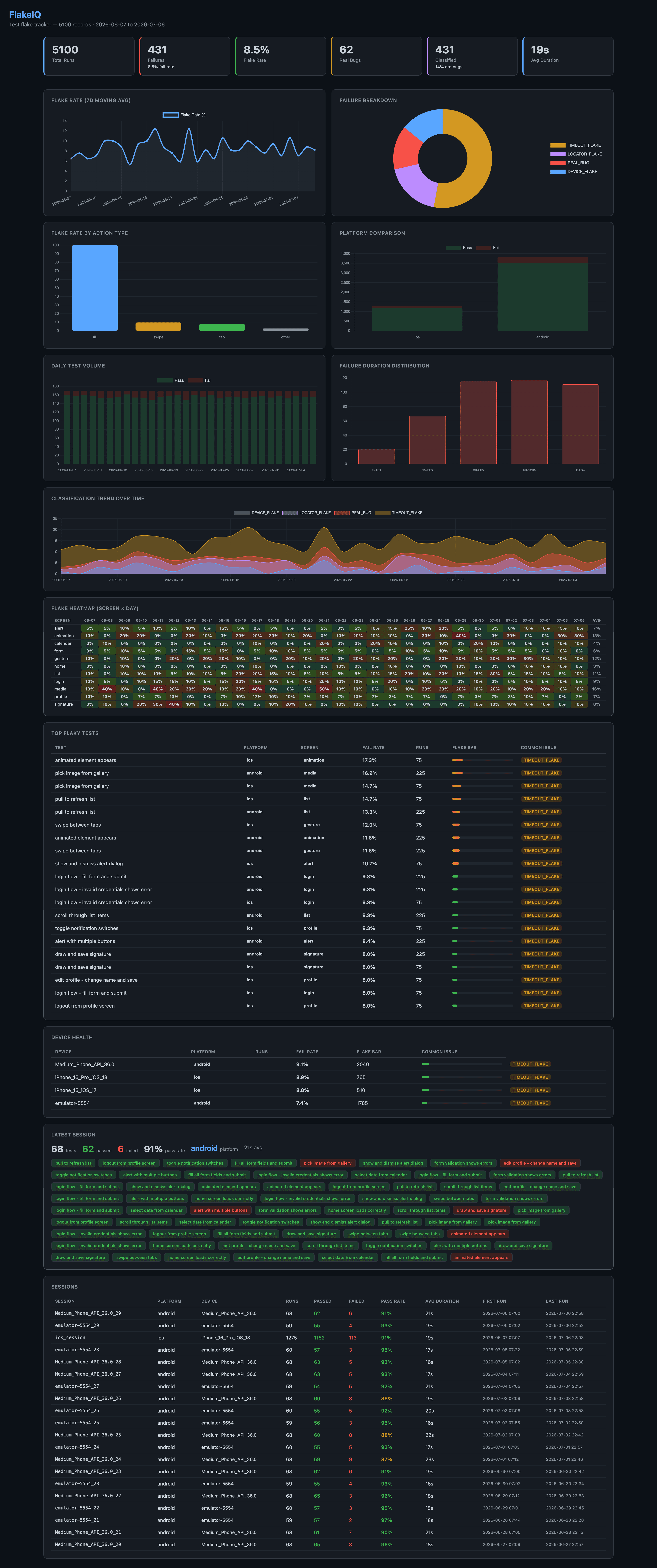
Built a flake analysis pipeline for mobile E2E tests that captures test context at runtime, classifies failures via Ollama (llama3.2), and visualizes trends in a real-time Chart.js dashboard.
Cross-Platform Mobile E2E Testing with mobilewright

Cross-Platform Mobile E2E Testing with mobilewright

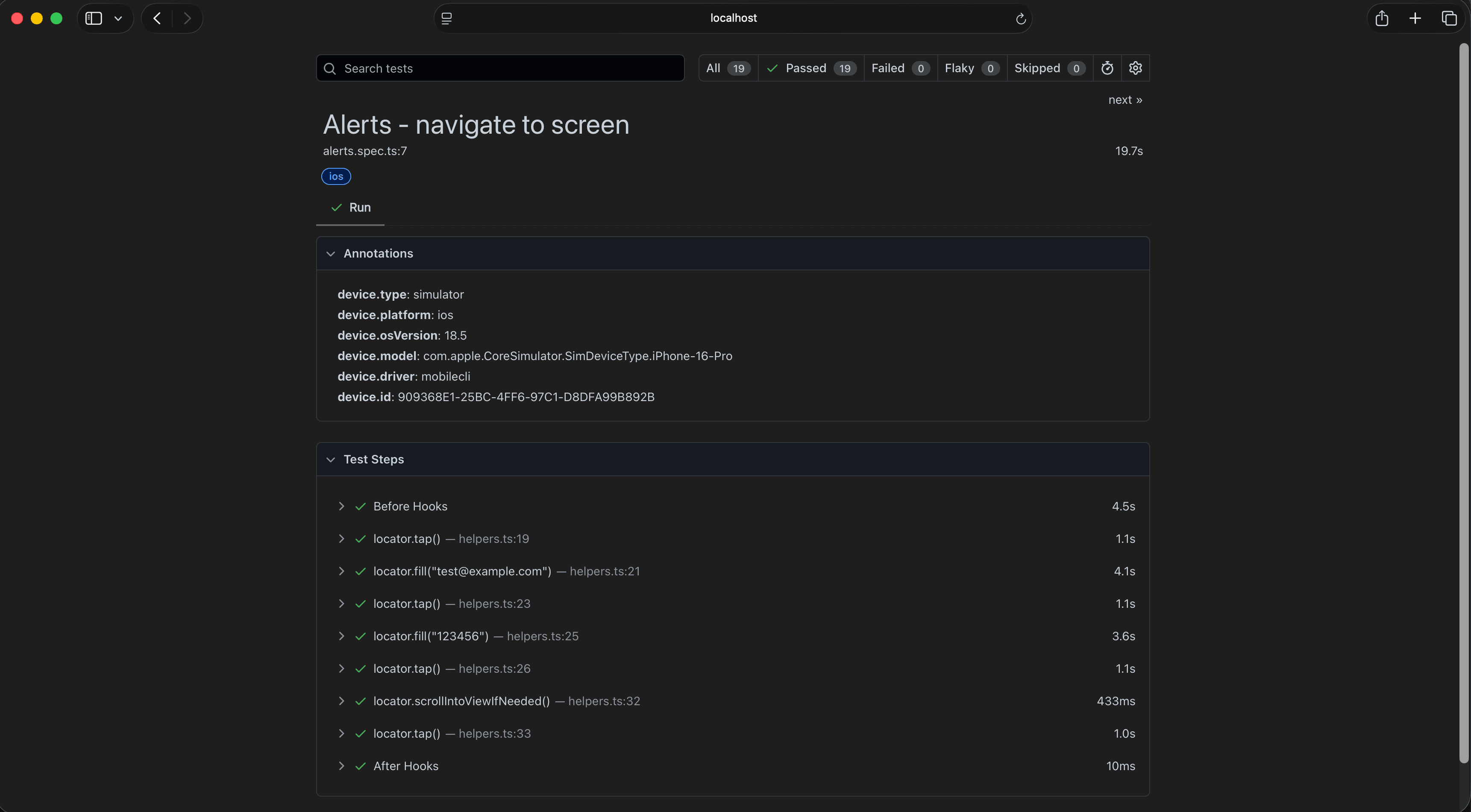
Configured and maintained a 19-test mobile E2E suite using mobilewright covering alerts, animation, calendar, forms, gestures, lists, media, signature, profile, and login flows — all passing on both iOS and Android. Contributed two upstream bug fixes to the mobilewright framework.

Adya — From SwiftUI Prototype to Cross-Platform Rewrite

A minimal daily task manager, first validated as a native SwiftUI/iOS prototype, then rebuilt from scratch in Expo/React Native (New Architecture) to ship one codebase across iOS and Android.